Andrew Ng, a Stanford Univ. Professor wanted to build more advanced AI system from inside Google. For AGI to build “increasingly accurate approximations to small parts of mammalian brain,” is the requirement. Ng discovered neural models could do more things if they had more nodes, layers and data to train on.

AI – To Know the ‘DEEP’ World

Andrew Ng, a Stanford Univ. Professor wanted to build more advanced AI system from inside Google. For AGI to build “increasingly accurate approximations to small parts of mammalian brain,” was a requirement. Ng discovered neural models that could do more things if they had more nodes, layers and data to train on. Later, OpenAI scientists modify Google’s Transformer design and fed more and more data to compute. Turned out the device worked positively improving the Machine Learning technique.

Neural Network -Human Brain

AI – About GPT, GPU, LaMDA, LLM 

The transformer’s invention (by Google) in 2017 was about as impactful to the field of AI as the advent of smartphones was to customers. Transformers also broadened the scope of what AI engineers could do. Handle far more data, process human language much more quickly.

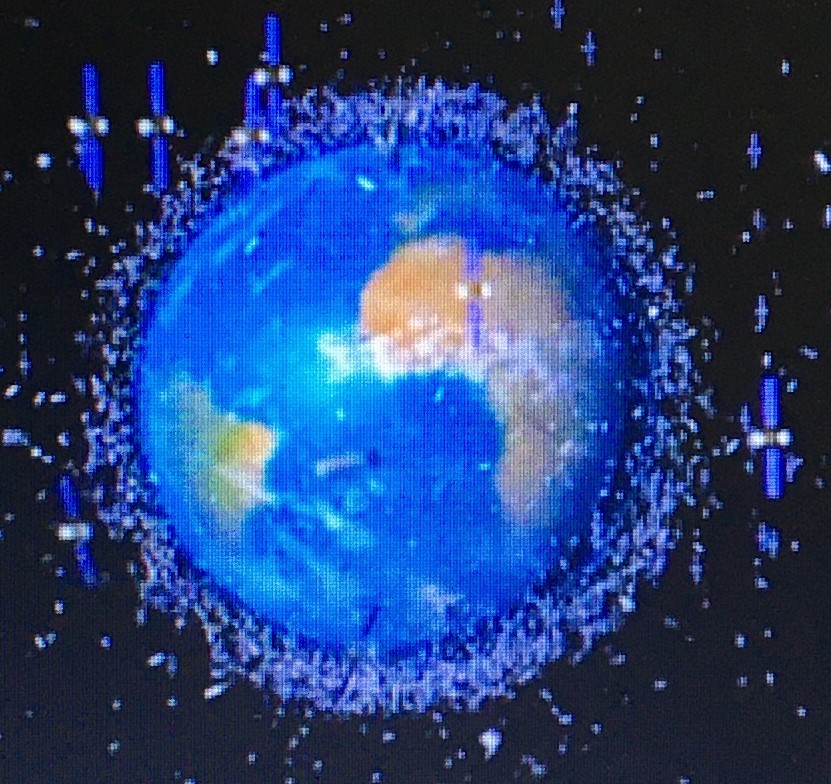
At the moment (and counting continues…) Starlink is the largest satellite megaconstellation ever constructed, consisting of about 7,500 operational satellites. And that number is growing all the time, with every batch of satellites (containing~ 21/ 23/ 27/29…) that reached @ LEO via Falcon 9 carrier. In every batch of satellites, — there included a certain number of (X ~ 7-13) satellites with direct-to-cell capability — to lower Earth orbit.

An Update on SRARLINK

7,500 is a huge number! So, how the satellite network look like now. Flying with ISS, NASA scientists have recorded a video recently. Keep in mind, the ISS position is 250 miles above you and me. Staying approximately 100 miles below the satellites position NASA scientists recorded a video of the network and named it “Starlink Satellites Swarm Like ‘Cosmic Fireflies’”

Introducing EUCLID

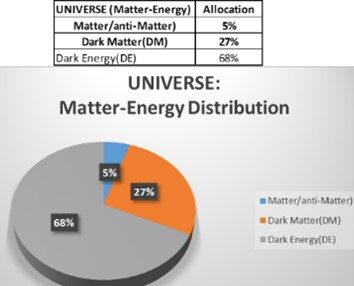
Over its six-year mission, Euclid will observe 1.5 billion galaxies, offering unprecedented insights into the Universe’s history and allowing scientists to test Einstein’s equations more rigorously.

Scroll to Top